
8M | Labour guarantees for women in Costa Rica: normative advances and pending challenges in wage equality and labour equality
Although Costa Rica has a robust and evolving legal framework, significant challenges and gaps persist in the labour market, both nationally and internationally, which must be analysed and addressed to ensure real equality of economic opportunities for women.
Remaining challenges - The gender pay gap
The gender pay gap refers to the difference in pay between men and women for work of equal or similar value. According to the latest version of the World Bank Group's "Women, Business and the Law" report, laws that seek to promote women's full economic participation are only partially implemented. Although many countries have made progress in enacting equal opportunity legislation, economies have, on average, less than half of the policies and services needed for effective implementation.
Despite international efforts to reduce and eventually eliminate the gender gap, in some regions the trend is the opposite: wage inequality has increased rather than decreased.
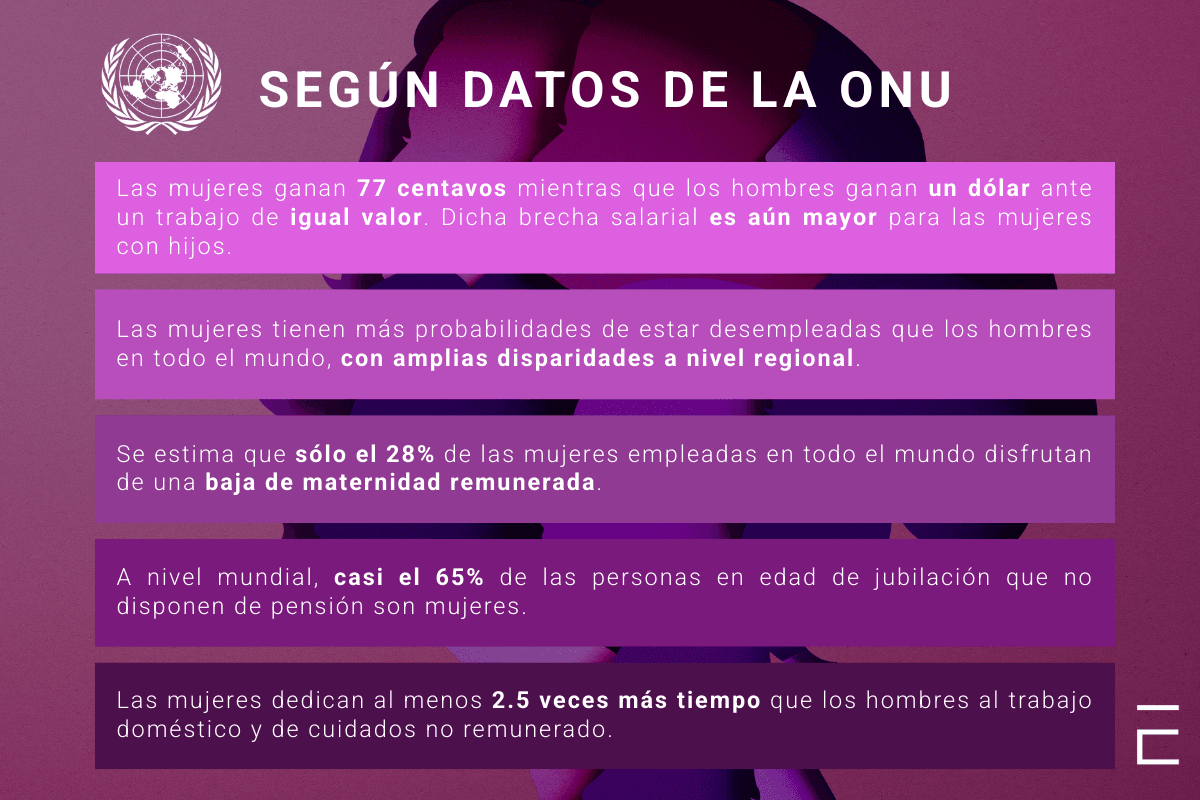
The post-pandemic era has introduced new challenges. Mandatory return-to-work policies have disproportionately impacted women, who have historically borne a greater burden of unpaid work. Lack of labour flexibility and insufficient public support services have led many women to reduce their working hours, take lower paid jobs or even leave the labour market altogether.
The recent expansion of the wage gap can largely be attributed to public and corporate policy decisions that do not take into account the unequal distribution of care work and the structural dynamics of domestic work. Rather than diminishing historical inequalities, these measures tend to deepen them.
International Equal Pay Day is a reminder of the global commitment to achieve equal pay for work of equal value, in line with human rights principles and the fight against discrimination.
In the Costa Rican context, Legislative File No. 25.374 - currently in process - seeks to establish effective mechanisms of transparency, verification and correction to guarantee this principle. Its proposals include the obligation to define salary ranges in job offers, to establish objective remuneration criteria and to submit reports to the MTSS to detect possible wage gaps.
In sum, equal pay continues to be one of the most urgent challenges in terms of labour rights and gender equality. While Costa Rica and the international community have made significant progress in creating regulatory frameworks, the gap between the law and its implementation remains considerable.
Achieving effective equality requires not only legislation, but also comprehensive public policies, business commitment and a cultural transformation that redistributes care responsibilities fairly. Only in this way will it be possible to build a more equitable, inclusive and sustainable labour market for all women.
If you would like to receive more information related to our labour law practice, please register here.
